

In this article
For a country that has spent the last few years talking about workplace flexibility, Singapore is facing an unexpected situation. Employees say they value flexibility. Employers increasingly promote it. Government guidelines now provide a clearer framework for requesting it. On paper, everything appears to be moving in the same direction. Yet the number of employees formally asking for a Flexible Work Arrangement remains lower than many expected.
That finding stands out because approval rates tell a very different story. When requests are submitted, employers are often willing to consider them, and many are approved. The challenge, it seems, is not convincing companies to say yes. It is convincing employees to ask the question in the first place.
This disconnect reveals something important about how workplace decisions are made. Policies matter, but people rarely make decisions based on policies alone. They make decisions based on experience, perception, office culture, and sometimes the stories they hear from colleagues around them.
In other words, the barriers to flexibility may no longer be administrative. They may be psychological.
Why Aren’t Employees Asking For Flexibility Even Though They Need It?
At first glance, the situation does not seem to make much sense.
Workplace surveys have consistently shown that flexibility ranks among the most desired employment benefits. For many employees, having greater control over where and when they work can make a significant difference to daily life. It can mean spending less time commuting, managing caregiving responsibilities more effectively, or simply having more control over personal schedules.
Despite those advantages, many workers still hesitate when it comes to making a formal request.
Part of the reason is that requesting a Flexible Work Arrangement often feels like more than an administrative process. Employees know they are not simply asking to adjust their schedule. In some cases, they feel they are also sending a signal about how they want to work, how committed they appear, and how they wish to be perceived within the organisation.
That concern may not be written anywhere in company policy, but it continues to influence behaviour.
Has Workplace Culture Caught Up With Workplace Policy?
One reality that organisations sometimes overlook is that culture moves more slowly than policy.
A company can introduce FWA guidelines overnight. Changing employee perceptions often takes years.
Many professionals still grew up in working environments where being physically present was closely associated with commitment and ambition. Showing up early, staying visible, and spending long hours in the office were often seen as signs of dedication.
The pandemic challenged many of those assumptions. Businesses discovered that productivity could be maintained outside traditional office settings. Employees learned that effective work was not necessarily tied to a desk.
Even so, old habits have a way of lingering.
Some employees continue to worry that choosing flexibility might quietly affect future opportunities. They wonder whether managers will remember the people they see most often. They question whether promotions, high-profile projects, or leadership opportunities naturally gravitate towards those who are physically present.
Whether those fears are justified varies from company to company. What matters is that they exist.
And as long as they exist, some employees will continue to stay silent, even when flexibility is available.
Employers May Be More Ready Than Employees Think
Interestingly, recent discussions around workplace flexibility suggest that employers may have moved further on this issue than employees realise.
Businesses today operate in a very different labour market from the one that existed a decade ago. Talent shortages, changing workforce expectations, and increased competition for skilled professionals have forced many organisations to rethink how work is structured.
For employers, flexibility is no longer simply an employee benefit. It has become a practical business tool.
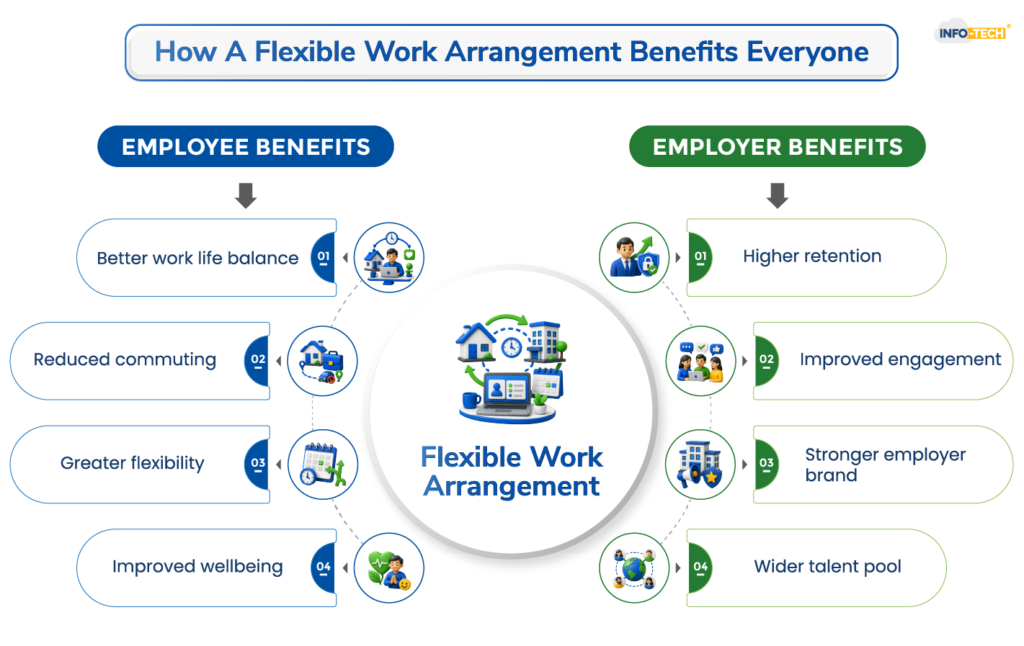
Companies have seen firsthand how workplace flexibility can support retention, improve employee satisfaction, and widen access to talent. For some organisations, offering a Flexible Work Arrangement is now as important as offering competitive compensation.
That does not mean every request will be approved. Operational realities still matter. Customer-facing roles, shift-based positions, and certain industries will always face limitations.
What has changed is the willingness to have the conversation.
Frequently Asked Questions:
What is a Flexible Work Arrangement in Singapore?
A Flexible Work Arrangement refers to alternative working arrangements that provide employees with flexibility in work location, working hours, or workload. Examples include hybrid work, remote work, flexible schedules, and compressed workweeks.
Are employers required to approve Flexible Work Arrangement requests?
No. Employers are not obligated to approve every request. However, under Singapore’s guidelines, employers are expected to consider requests fairly and provide reasonable responses.
Why do employees hesitate to request flexible work arrangements?
Common reasons include concerns about career progression, workplace perceptions, manager support, and fears of being viewed as less committed.
