
In this article
Most business owners don’t lose sleep over buying software. What keeps them awake is everything that comes after. A customer management system usually enters the conversation when a company starts growing. Customer enquiries increase, sales teams expand, spreadsheets become difficult to manage, and important information ends up scattered across emails, WhatsApp conversations, and multiple departments. At that point, investing in CRM Software seems like the logical next step.
The vendor demonstration looks impressive. The monthly subscription fee appears reasonable. Management sees an opportunity to improve productivity and strengthen customer relationships.
Then reality sets in.
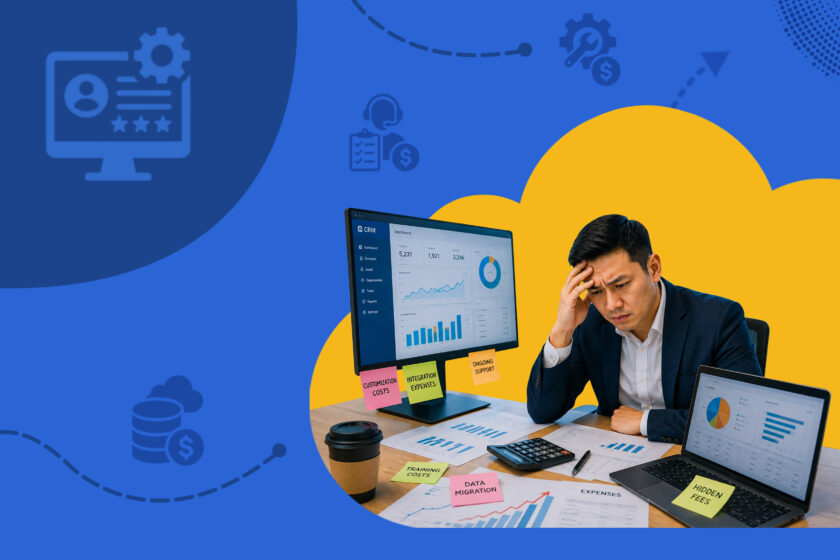
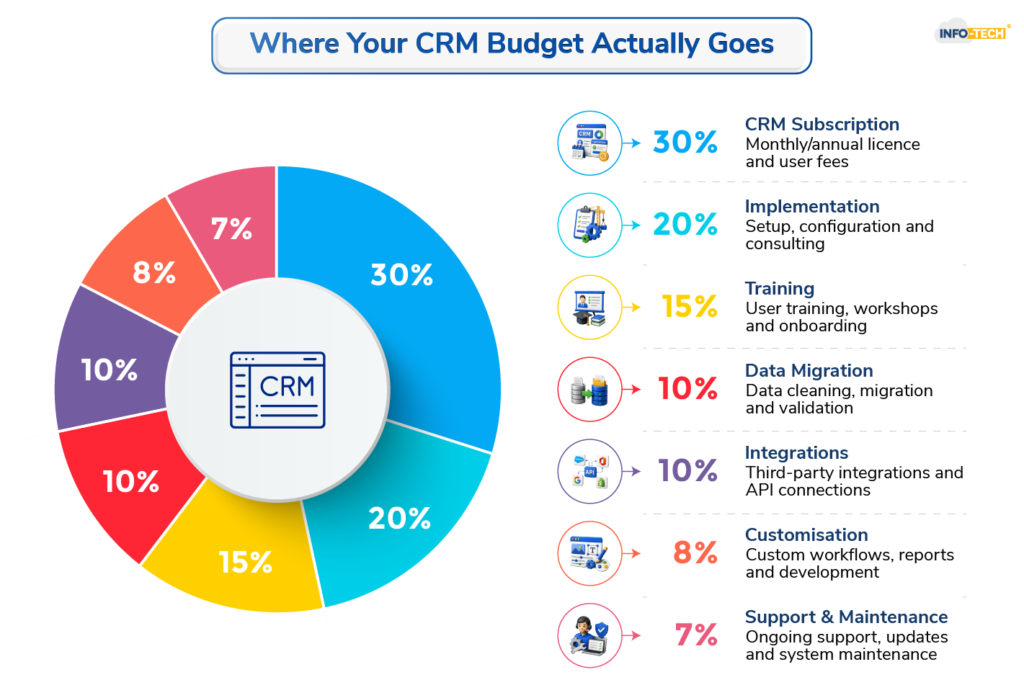
A few months later, the company discovers that the software itself was only one part of the investment. There are implementation costs that nobody initially discussed in detail. Data needs cleaning before it can be imported. Employees require training. Integrations with existing systems become more complicated than expected. Suddenly, the budget approved at the beginning no longer reflects what the business is actually spending.
This is not unique to Singapore. However, for many local SMEs operating with tight margins and carefully planned technology budgets, these unexpected expenses can have a significant impact.
Understanding where these costs come from is often the difference between a successful CRM implementation and an expensive lesson.
Why Does The Software Often Cost More Than Expected?
The issue isn’t usually the software vendor.
The issue is that many businesses only budget for what they can see.
When evaluating CRM Software, attention naturally gravitates towards subscription pricing. A package might cost a few hundred dollars a month, which feels manageable compared to the potential benefits of better customer tracking and sales management.
What often gets overlooked is everything required to make the system useful.
Think about it this way. Purchasing a CRM platform is similar to moving into a new office. The rental cost is obvious, but it is rarely the final number. Renovation, furniture, networking equipment and operational adjustments all contribute to the real cost of occupancy.
The same principle applies to customer management systems.
The software may be the foundation, but the surrounding work is what turns it into a functioning business tool.
Is Data Migration One Of The Biggest Hidden Costs?
For many businesses, yes.
On the surface, moving customer records from one system to another sounds relatively straightforward. Most companies assume they can simply export a spreadsheet and upload it into the new platform.
Unfortunately, customer data accumulated over years is rarely organised as neatly as people imagine.
A business may discover multiple versions of the same customer. Contact details may be outdated. Sales notes could be stored across different systems. Some records might be incomplete, while others contain conflicting information.
Before any migration takes place, someone needs to sort through the mess.
That process takes time.
Sometimes it takes a lot of time.
In larger organisations, employees can spend weeks reviewing customer information before the first record is transferred into the new CRM Software platform. Some companies engage consultants to manage the process, creating an additional cost that wasn’t part of the original budget discussion.
Ironically, many businesses only realise how disorganised their customer data is when they attempt to move it.
Why Do Employee Training Costs Get Ignored?
There is a common assumption that modern software is intuitive enough for everyone to learn quickly.
In reality, every new system changes how people work.
Sales representatives who have relied on spreadsheets for years suddenly need to update opportunities inside a CRM. Managers must learn how to generate reports. Customer service teams need to record interactions consistently.
None of these changes happen automatically.
Even when the software itself is user-friendly, employees still need time to adjust their habits.
The challenge is that training costs are not always measured in dollars alone.
There is the direct cost of workshops, onboarding sessions and support materials. Then there is the indirect cost of reduced productivity while employees learn new processes.
For growing businesses, this temporary slowdown can come as an unpleasant surprise.
Yet without proper training, the system often fails to deliver the benefits that justified the investment in the first place.
How Do Integrations Quietly Increase Costs?
One of the promises of modern CRM Software is connectivity.
Businesses are told that everything can be connected. Accounting systems, email marketing platforms, e-commerce stores, customer service tools and communication channels can all work together.
And they can.
The question is how much effort it takes to get there.
| Business Function | Integration Example |
| Accounting | Xero, QuickBooks |
| HR | HRMS platforms |
| Marketing | Email automation tools |
| E-commerce | Shopify, WooCommerce |
| Customer Support | Helpdesk systems |
| Communication | WhatsApp, Teams, Zoom |
Each integration introduces potential costs.
Many companies discover that while integrations are technically available, they still require configuration, testing and ongoing maintenance. In some cases, third-party connectors carry their own subscription fees. In others, developers need to be brought in to customise workflows.
The result is a cost that appears gradually rather than all at once.
Unlike the software subscription, which is clearly listed on a pricing page, integration expenses often emerge during implementation when the business is already committed to the project.
Conclusion
Modern CRM Software can transform how Singapore businesses manage customer relationships, improve sales performance, and drive long-term growth. However, the subscription fee is only one part of the equation.
The real costs often emerge through implementation, data migration, staff training, integrations, customisation, security requirements, AI add-ons, and ongoing maintenance. Businesses that understand these expenses early are far more likely to achieve a strong return on investment and avoid budget overruns.
For organisations evaluating customer management solutions, the smartest approach is not simply choosing the cheapest platform. It is selecting a CRM Software solution that aligns with business goals, supports future growth, and delivers measurable value without unexpected surprises.
Frequently Asked Questions:
What is the biggest hidden cost of CRM Software?
For many businesses, implementation and employee adoption become the largest hidden costs. A CRM system only delivers value when teams actively use it.
Is CRM Software expensive for SMEs in Singapore?
The software itself may be affordable, but additional costs such as training, integrations, customisation, and support can increase the overall investment.
How can businesses reduce CRM implementation costs?
Planning business processes in advance, cleaning customer data before migration, and choosing scalable platforms can help reduce implementation expenses.
