

In this article
- 1. Why HR is Important in Fiscal Year Reporting?
- 2. What Are the HR Responsibilities During Fiscal Year Reporting?
- 3. What HR Data Are Required for Fiscal Year Reporting?
- 4. How is HR Connected To Finance and Audit Teams?
- 5. What Are the Fiscal Year Reporting Challenges for HR Teams?
- 6. What Are the HR Preparation Requirements For Fiscal Year?
- 7. How HR Software Improves Fiscal Year Reporting?
- 8. Fiscal Year Frequently Asked Questions
Fiscal year reporting is not a finance department responsibility. In modern organizations, Human Resources plays a central role to ensure that workforce data, payroll records statutory contributions and employee benefits are reflected in financial reports and audit documentation.
For companies in Singapore fiscal year preparation often involves cross-functional collaboration between HR, finance, payroll teams and external auditors. Since workforce costs represent one of the largest operational expenses, auditors examine HR records such as payroll reports, bonuses, leave liabilities, benefits and statutory contributions.
Without proper preparation, organizations may face discrepancies in reporting, compliance risks, audit delays or financial misstatements.
This guide explains what HR teams need to prepare before fiscal year reporting, how they can work together with finance and audit teams, and the key HR data that must be reconciled before financial statements are finalized.
| What does HR need to prepare for fiscal year reporting? HR teams must prepare payroll reconciliation reports, employee benefits data, leave liabilities, workforce headcount records statutory contribution reports and employment documentation. This information supports financial statement preparation, tax reporting and audit verification ensuring workforce-related expenses are reflected in company accounts. |
Why HR is Important in Fiscal Year Reporting?
In many organizations, the fiscal year closing process depends on accurate workforce data maintained by HR departments.
Finance teams rely on HR to provide information such as:
- Total payroll expenses
- Bonuses and incentives
- Employee benefits and allowances
- Leave liabilities
- Headcount and workforce changes
- CPF contributions and statutory deductions
Since these figures have an impact on profit and loss statements, cost allocation, and tax reporting, HR records must be accurate and reconciled.
What Are the HR Responsibilities During Fiscal Year Reporting?
Preparing for fiscal year reporting requires HR teams to review multiple workforce records and ensure they align with finance data.
The process includes several critical tasks.
1. Payroll Reconciliation
Payroll reconciliation is one of the most important activities HR must complete before year-end reporting.
This process involves verifying that payroll records match the financial figures recorded by the accounting department.
- HR teams should review:
- Total annual payroll cost
- Bonuses and incentive payments
- Overtime payments
- Salary adjustments
- Employee reimbursements
- Allowances and benefits
HR must resolve any discrepancies between payroll reports and finance records before the company finalizes financial statements.
Payroll reconciliation ensures that the company’s financial accounts reflect employee compensation expenses.
2. Verification of Employee Benefits and Allowances
Employee benefits often represent a complex component of fiscal reporting.
These may include:
- Medical benefits
- Transport allowances
- Housing benefits
- Flexible benefits
- Stock options
- Insurance coverage
From a financial reporting perspective, benefits may fall under different accounting classifications.
HR teams must work with finance to confirm:
- Which benefits are taxable
- Which benefits must be disclosed in financial statements
- Whether benefits-in-kind are recorded
For Singapore companies certain benefits must also be reported through IRAS tax reporting requirements.
3. Leave Liability Calculations
Unused employee leave represents a financial liability for many organizations.
Companies must calculate the value of accumulated leave because employees may:
- Carry forward leave
- Encash leave
- Use it in the fiscal year that follows
HR teams provide data such as:
- Annual leave balances
- Carry-forward leave policies
- Leave encashment eligibility
Finance teams then convert these figures into monetary liabilities recorded in financial statements.
4. Headcount and Workforce Data Reporting
Workforce data also has a significant role in fiscal year reporting.
Finance and audit teams may request information such as:
- Total headcount
- New hires during the year
- Employee resignations
- Workforce expansion or downsizing
- Contract vs full-time employees
This information helps auditors understand:
- Changes in payroll expenses
- Workforce growth trends
- Cost allocation across departments
HR should ensure that employee records are up-to-date and consistent with payroll data.
What HR Data Are Required for Fiscal Year Reporting?
During fiscal year reporting, finance and audit teams request several HR datasets.
The table below summarizes the most common information HR departments must provide.
| HR Data Category | Information Required | Why It Matters |
| Payroll Reports | Annual payroll totals, bonuses, overtime | Verifies salary expenses |
| Employee Benefits | Allowances, insurance, medical benefits | Determines taxable benefits |
| Leave Balances | Unused leave and encashment policies | Calculates leave liabilities |
| Headcount Data | Total employees, hires, resignations | Supports workforce analysis |
| Statutory Contributions | CPF, levies, mandatory deductions | Compliance verification |
| Employee Contracts | Salary agreements and bonus clauses | Confirms payroll accuracy |
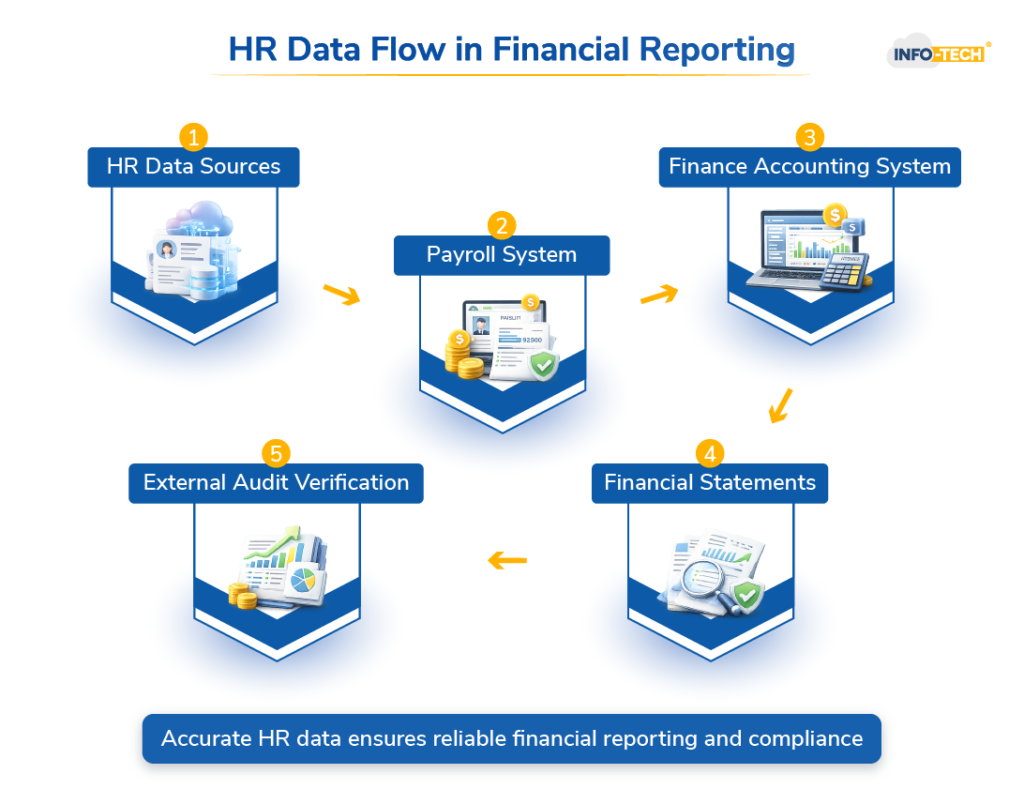
This documentation ensures that financial reporting shows workforce-related costs with accuracy.
How is HR Connected To Finance and Audit Teams?
Strong teamwork between departments is necessary for successful fiscal year reporting.
Each team plays a different role.
| Department | Key Responsibilities |
| HR | Maintain workforce records and payroll data |
| Finance | Prepare financial statements and expense reports |
| Payroll Team | Ensure salary calculations are accurate |
| External Auditors | Verify compliance and financial accuracy |
What Are the Fiscal Year Reporting Challenges for HR Teams?
Many HR departments face challenges during fiscal year reporting due to fragmented systems or incomplete records.
Some of the most common issues include:
- Inconsistent payroll records
When payroll data differs from accounting reports, reconciliation becomes difficult.
- Manual HR data management
Companies that rely on spreadsheets may struggle with data accuracy.
- Missing employee documentation
Auditors often require employment contracts, compensation records and bonus policies.
- Lack of real-time workforce visibility
Without proper reporting systems, HR teams may struggle to produce accurate headcount reports.
These issues can slow down the fiscal closing process.
What Are the HR Preparation Requirements For Fiscal Year?
To ensure a smooth fiscal year reporting process, HR teams should complete several key tasks before year-end.
- Reconcile payroll records with finance reports
- Validate employee salary and bonus payments
- Review benefits and taxable allowances
- Verify leave balances and encashment policies
- Confirm headcount changes throughout the year
- Ensure employee contracts and compensation records are complete
- Prepare HR documentation for external audits
These steps help prevent last-minute compliance issues.
How HR Software Improves Fiscal Year Reporting?
Modern organizations rely on HR and payroll software to simplify the preparation of fiscal year reporting.
HR systems that are integrated help by:
- Centralizing employee records
- Automating payroll calculations
- Generating workforce reports
- Tracking leave liabilities
- Maintaining audit-ready documentation
For growing companies, digital HR systems have a major effect on reducing the administrative workload involved in fiscal year reporting. Companies in Singapore often implement HRMS software to ensure workforce data, payroll reports and compliance records remain accurate and accessible to finance teams and auditors.
Learn More: How Financial Reporting Improves Smarter Business Decisions
Fiscal Year Frequently Asked Questions:
What is fiscal year reporting in HR?
Fiscal year reporting in HR refers to the process of compiling workforce-related financial data for accounting and audit purposes. This includes payroll expenses, bonuses, employee benefits, leave liabilities statutory contributions and workforce headcount information used in company financial statements.
Why does finance need HR data for fiscal reporting?
Finance teams rely on HR data to calculate total employee-related expenses. Payroll, benefits, bonuses and statutory contributions form a major part of operational costs and must be reported in financial statements and tax filings.
What HR documents do auditors request?
Auditors typically request payroll reports, employee contracts, bonus agreements statutory contribution records, benefits documentation and leave liability calculations to verify the accuracy of workforce expenses recorded in financial statements.
How can HR prepare for fiscal year audits?
HR can prepare for fiscal year audits by reconciling payroll records reviewing employee benefits ensuring employment documentation is complete verifying leave balances and working with finance teams to guarantee accurate financial reporting.
