
Compensatory leave, also called time off in lieu, is often seen as a given in many Singapore workplaces. Employees assume they should get it whenever they put in extra hours, while employers sometimes feel it’s up to them to decide. The Ministry of Manpower (MOM) says the truth is somewhere in the middle.
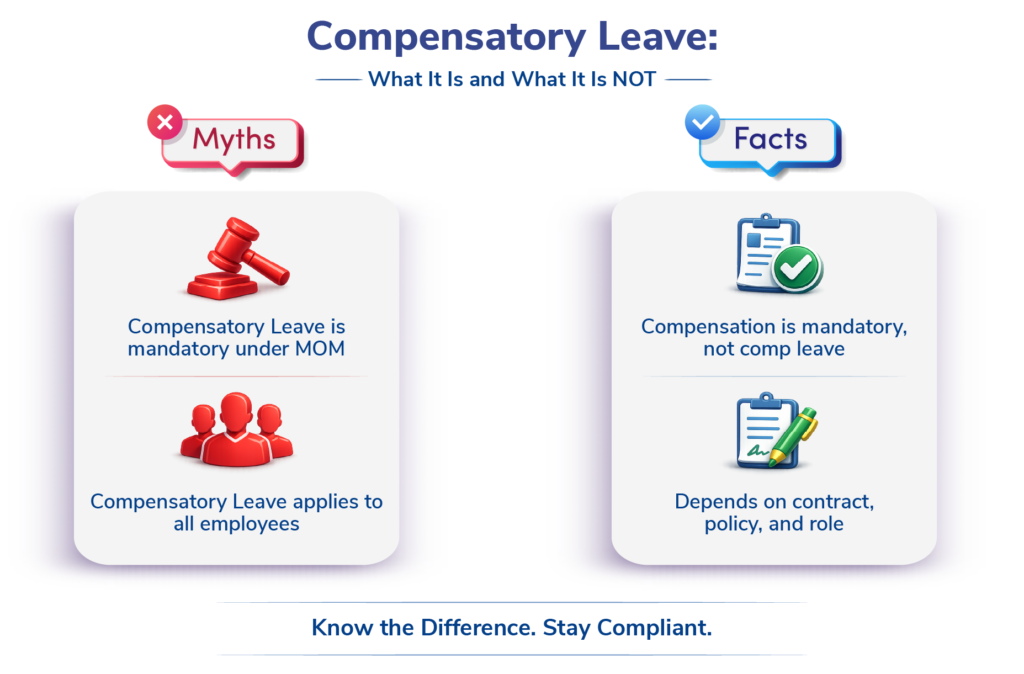
MOM doesn’t require compensatory leave under the Employment Act. But companies must make sure employees are fairly compensated when they work more than their usual hours. The key point is that while companies must compensate, they have options in how they do it.
How Compensatory Leave Works in Real Life
Time off to employees for extra hours worked outside their usual schedule is called compensatory leave. This can cover overtime, work on rest days, or work on public holidays. Rather than giving extra pay, companies let employees take time off later.
In Singapore, this leave is a practice companies choose to offer, not a right guaranteed by law. However it may be carried out, it depends on what is written in the contracts.
MOM’s Stance on the Law: What’s Mandatory vs What’s Optional
MOM’s approach is based on principles, not benefits. The Employment Act makes sure employees aren’t at a disadvantage when they work extra hours, but it doesn’t set one compensation method for all cases.
A simple way to think about this:
- Compensation can be mandatory
- Compensatory leave is usually optional
What employers must do (where applicable under the Employment Act)
Employers must:
- Follow statutory rules for overtime, rest day work, and public holiday work
- Pay employees properly when statutory pay rules apply
- Honour written terms in employment contracts and HR policies
What employers do not have to do
MOM does not require employers to:
- Automatically grant this leave – whenever extra hours are worked
- Give time off if the employee has already been compensated correctly through wages
- Create a comp leave policy if the company has not adopted one
So the key point is: MOM doesn’t force employers to give compensatory leave, but employers can’t ignore compensation obligations.
When Compensatory Leave Is NOT Mandatory
Compensatory leave is generally not mandatory when:
1). Overtime pay is already paid correctly
If overtime wages are payable under the Employment Act and the employer pays them correctly, the employer is typically considered to have met the legal requirement, no additional time off is automatically required.
2). There is no policy or contractual agreement
If the contract and company policies are silent on time off in lieu, employees usually cannot demand compensatory leave purely based on “MOM rules”, because there is no statutory entitlement to it.
3). The employee is not under overtime provisions
Not every role is covered by the same statutory overtime protections. Where overtime provisions do not apply, compensatory leave becomes an internal arrangement, not a legal requirement
When Compensatory Leave Becomes Mandatory in Practice
While MOM doesn’t require this leave as standard, companies can make it a must through their own policies.
The leave becomes necessary when:
- The job contract states it
- Company rules or employee guides spell it out
- It replaces overtime pay by mutual agreement
Once written down or used, MOM expects employers to stick to it. Not doing so can lead to arguments or MOM stepping in even though the perk isn’t required by law.
Public Holiday Work: Accepted Compensation Options
When staff work on a public holiday, MOM requires payment but allows different ways to provide it.
Employers can pick one of these:
- Give an extra day’s pay
- Offer a paid day off instead
- Allow time off based on mutual agreement
Compensatory leave is allowed but not required. The key point is that the employee doesn’t lose out.
Rest Day Work and Compensatory Leave
Rest day work has stricter rules, with MOM setting specific pay-based compensation guidelines. Companies must pay for rest day work based on hours worked and whether the employers asked for it.
You can use compensatory leave if:
- Your job contract or company rules allow it
- It doesn’t replace required rest day pay
Using comp leave to skip required rest day wages isn’t okay.
Common Employer Mistakes That Lead to MOM Complaints
Most compensatory leave disputes stem from administrative issues rather than legal ones.
Common problems include:
- Comp leave approved verbally but never recorded
- Employees don’t know how their extra hours turn into time off
- Inconsistent application across departments
- Employees unable to utilise comp leave before expiry
These gaps often cause employees to complain to MOM even when employers had no intention to breach regulations.
How These Issues Can Be Easily Resolved With Leave Management Software
As work setups become more flexible, tracking compensatory leave manually increases the risk of breaking rules. Leave management software helps companies keep all records centralized, make approvals in a standard manner, and use the same policies for everyone.
With a well-organized system, companies can:
- Keep an accurate record of extra work hours
- Automatically calculate compensatory leave entitlements
- Maintain audit-ready records for MOM compliance
- Reduce disputes caused by unclear or missing documentation
This transparency helps employees trust the company and know what they’re owed.
Key Takeaway
Compensatory leave under MOM is not a statutory requirement, but fair compensation always is. Companies have some wiggle room, but that flexibility must be exercised carefully, documented clearly, and applied consistently.
When backed by clear policies and reliable leave management software, it becomes a useful tool instead of a compliance risk.
Frequently Asked Questions:
What is compensatory leave?
Compensatory leave, also known as time off in lieu, is paid leave granted to employees in exchange for working beyond their normal working hours, such as overtime, rest day work, or public holiday work. In Singapore, compensatory leave is not a statutory entitlement under MOM but may be offered based on employment contracts, company policies, or mutual agreement.
What are the rules for compensatory time off?
MOM does not prescribe fixed rules for compensatory time off. Instead, compensatory leave is governed by employment contracts and company policies. Employers must ensure employees are fairly compensated for extra work, either through overtime pay or agreed time off. Compensatory leave cannot replace mandatory overtime pay unless the employee agrees and is not legally entitled to overtime wages.
What is the reason for compensatory off?
Compensatory off is typically granted to recognise additional work performed outside normal working hours. Common reasons include working overtime, working on rest days, or working on public holidays. It is used as an alternative to monetary compensation when allowed by contract or company policy, helping employers balance operational needs with employee well-being.
Is there compensation leave for death in Singapore?
Leave granted due to a death in the family is classified as compassionate leave, not compensatory leave. MOM does not mandate compassionate leave, and any entitlement depends on company policy or employment contracts. Employers may grant paid or unpaid compassionate leave at their discretion, commonly for immediate family members.
